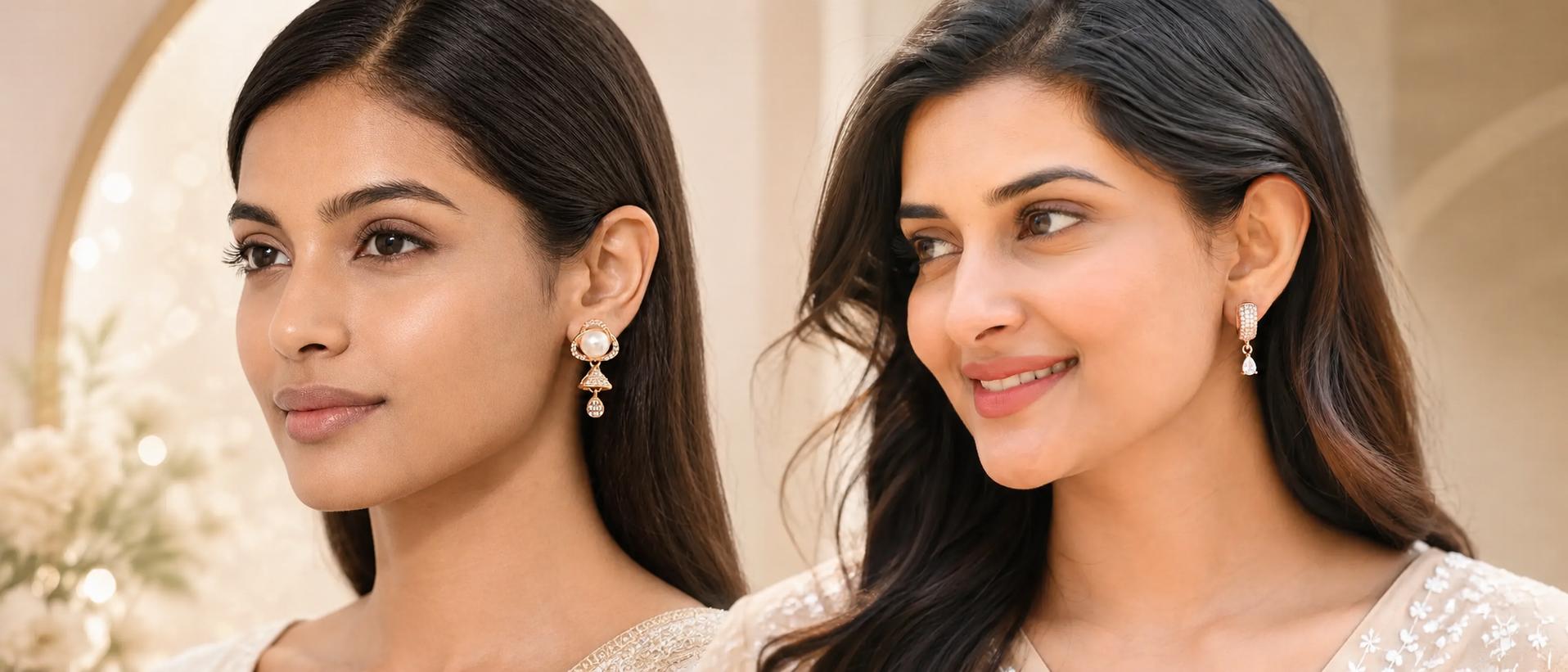
Jhumki vs Bali: Which Earring Style Suits Your Face and Occasion
Two earrings dominate almost every Indian jewellery box: the jhumki, with its bell-shaped dome and gently swinging fringe, and the bali, the hoop that refuses to ever go out of style. Both are lovely. Both are versatile. So when you are staring at a collection page trying to decide, the real question is not which earring is better, but which one is better for you: your face, your outfit, and the occasion you are dressing for. This guide settles the jhumki vs bali question the practical way, with clear picks for every face shape and every kind of day.
- Jhumki vs bali, the quick answer
- What is a jhumki, and its types
- What is a bali
- Which earring suits your face shape
- Choosing by occasion
- Rose gold, finishes and skin-friendly wear
- What should you spend
Jhumki vs bali, the quick answer
If you only have a minute, here is the short version. A jhumki is a bell or dome-shaped earring, usually edged with a row of tiny beads or drops that move when you do. It leans traditional, adds a vertical drop, and brings instant festive charm. A bali is a hoop. It leans modern, frames the face in a soft circle, and slips just as easily into a work day as a weekend dinner.
A simple rule of thumb: reach for a jhumki when you want your earrings to be the moment, and a bali when you want them to quietly finish the look. Neither is dressier by default. A tiny stud jhumki is perfect for the office, and a chunky CZ-studded bali can absolutely carry a reception outfit.
What is a jhumki A look at the types
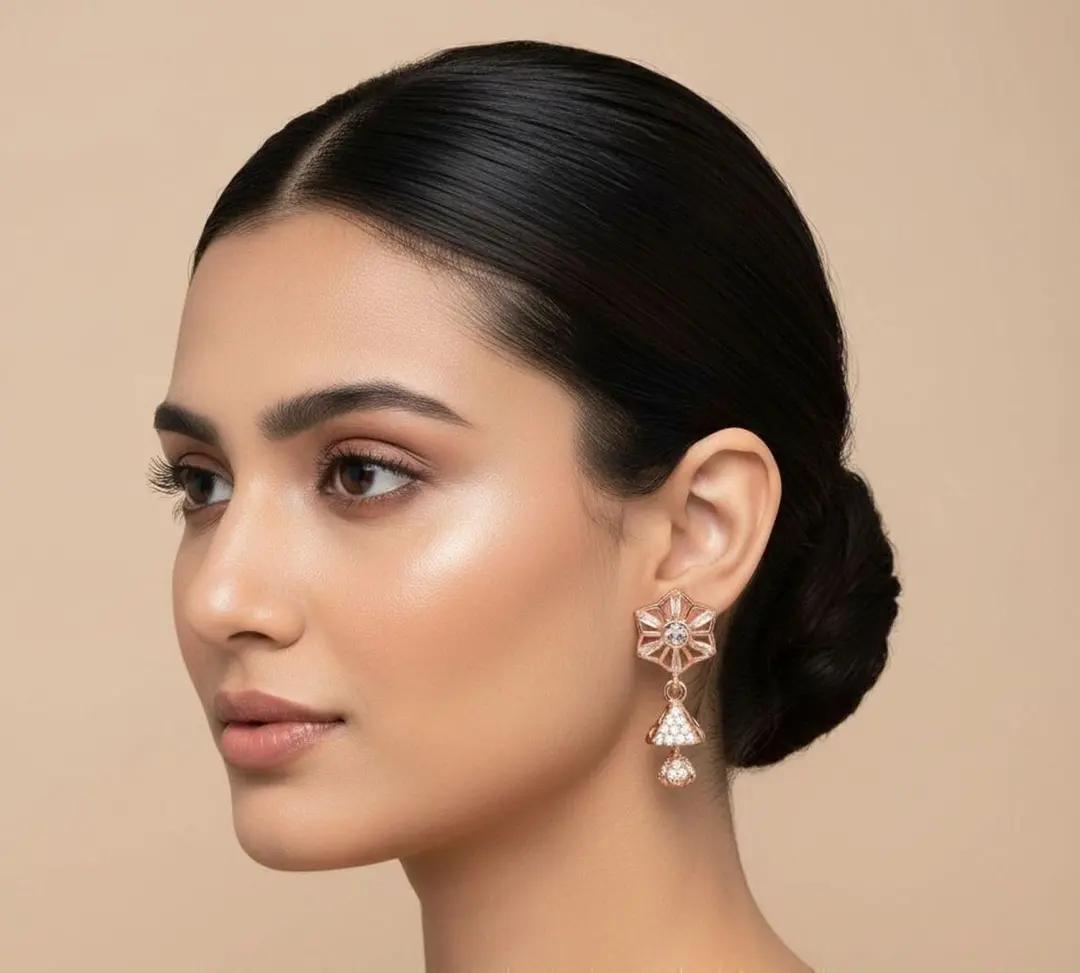
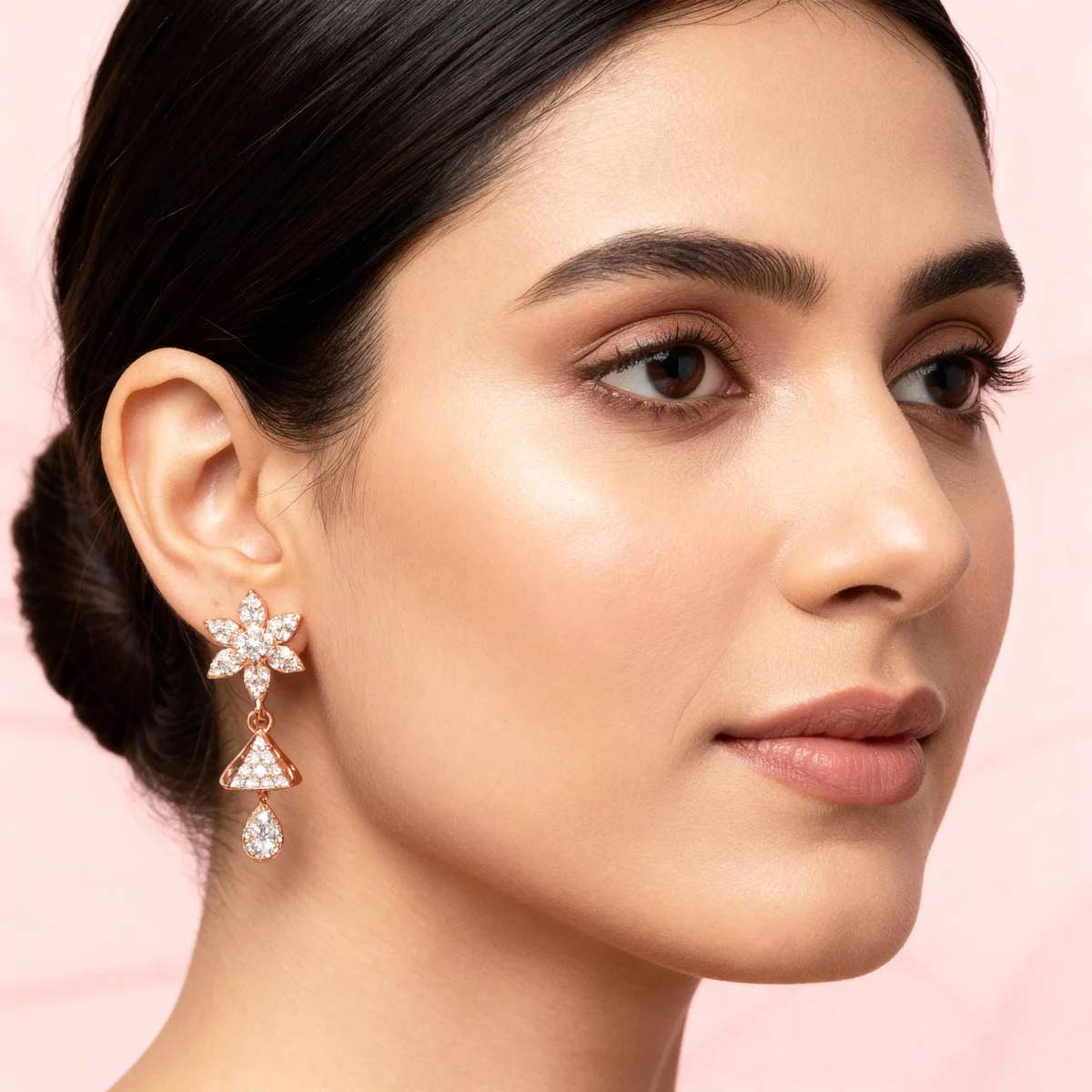
The jhumki takes its name from the way it hangs and sways. At its heart is a dome or bell that faces downward, usually fringed with small drops. Within that family, a few types of jhumki earrings come up again and again.
- Classic dome jhumki: the timeless bell shape, plain or lightly worked, sized from tiny to grand.
- Chandbali jhumki: a crescent-moon top with a jhumki drop below, the most regal of the lot and a wedding favourite.
- Multi-tier jhumki: two or three stacked domes for extra movement and presence on festive days.
- CZ and pearl-drop jhumki: a dome fringed with cubic zirconia sparkle or soft pearls, dressy without the weight.
- Mini or stud jhumki: a small dome on a stud back, the quiet everyday hero that works with kurtas and shirts alike.
What is a bali The hoop, reinvented
The bali is the Indian hoop, and it has quietly become the most-reached-for earring for women who want one pair to do everything. Its shape is simple, but the variations are endless, which is exactly why bali earrings for women keep trending season after season.
- Classic plain hoop: clean, round and endlessly wearable, from thread-thin to bold.
- Textured or twisted bali: a rope, ridged or hammered surface that catches the light without any stones.
- CZ-studded bali: a hoop lined with cubic zirconia for a dressier, sparkling finish.
- Charm or drop bali: a hoop with a small dangling motif, part hoop and part statement.
- Huggie bali: a snug little hoop that hugs the lobe, ideal for a second piercing or a stacked look.
Which earring suits your face shape
This is where the jhumki vs bali choice gets personal. Picking earrings for face shape is really about balance: pieces that echo the softness of your features or gently offset their angles.
- Round face: length is your friend. Choose a jhumki with a clear vertical drop, or a slim, slightly oval bali. These add definition. Very large round hoops can echo the roundness, so keep hoops narrow.
- Oval face: lucky you, almost everything works. Both a medium jhumki and a classic bali flatter an oval face, so choose by occasion instead.
- Square face: soften strong angles with curves. Round balis and rounded, fluid jhumkis take the edge off a defined jaw beautifully.
- Heart-shaped face: balance a narrower chin with a jhumki that widens towards the bottom. The fuller base evens out the face's proportions.
- Long or oblong face: add width, not more length. Studs, small-to-medium hoops and compact jhumkis suit you best, while very long drops can make the face look longer.
Style editors have said the same thing for years: match the earring's shape to your face's shape, and the whole look lifts. Beauty publications like Byrdie return to this face-shape principle again and again, and it holds just as true for jhumkis and balis as it does for Western drop earrings.
 Our jhumki edit spans mini studs to festive chandbalis, all in skin-friendly anti-tarnish plating.
Choosing by occasion
Face shape narrows the field. The occasion makes the final call.
- Everyday and office: keep it light and quiet. Mini jhumkis and thin-to-medium balis stay comfortable through long days and video calls. Browse the Daily Wear edit for pieces made to be forgotten on the ear.
- Parties and dinners: this is the time for a little drama. A CZ-studded bali or a mid-size jhumki with sparkle photographs beautifully in evening light. The Party Edit is built for exactly these nights.
- Weddings and festivals: go ornate. Chandbali jhumkis and large, worked domes are made for heavy ethnic wear and celebration. The Wedding Edit gathers the grandest of them.
Rose gold, finishes and skin-friendly wear
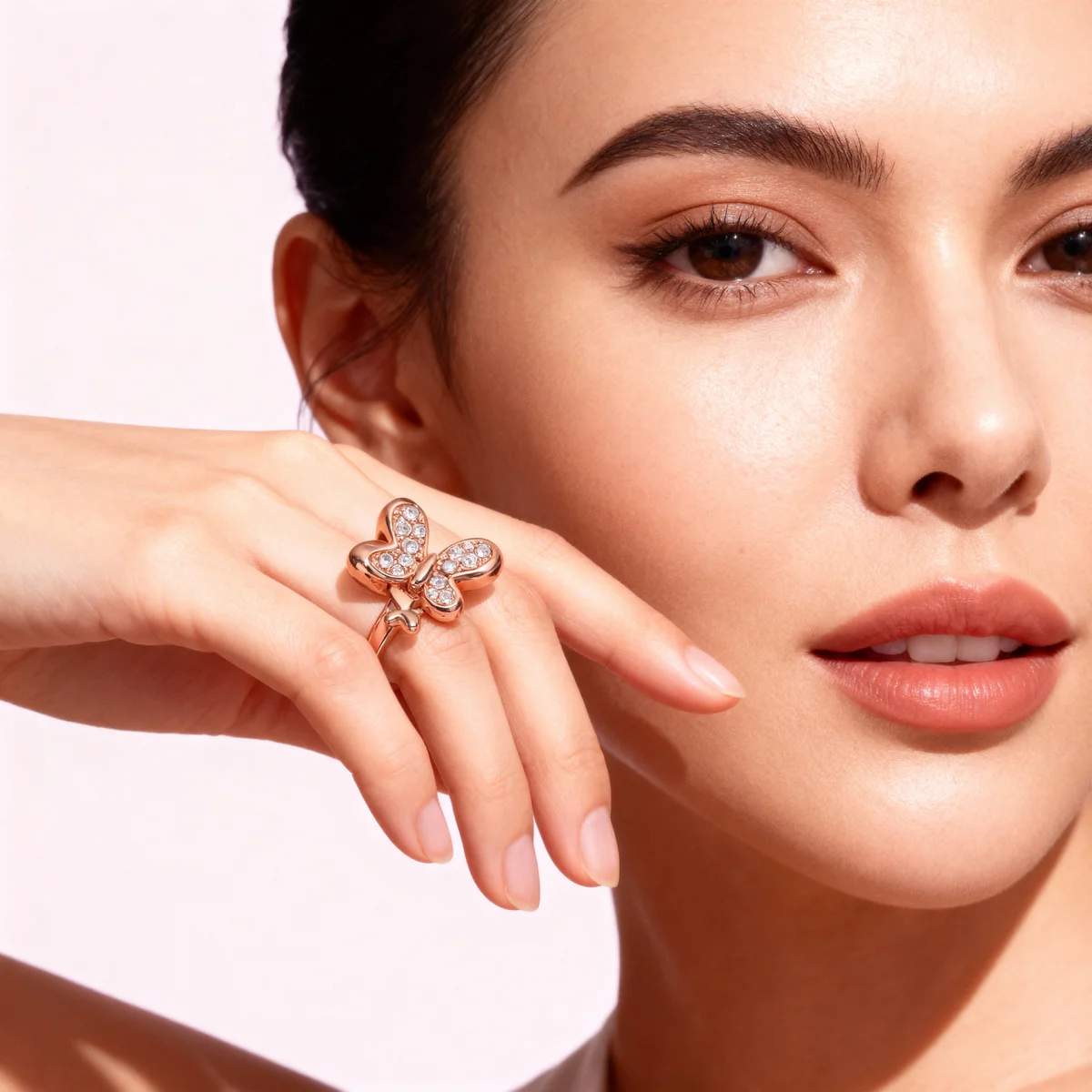
Whichever shape you choose, the finish decides how often you will actually wear it. Rose gold has become the runaway favourite for both jhumkis and balis, and for good reason: its warm blush flatters most Indian skin tones, photographs softly, and pairs with gold and silver wardrobes alike. A rose gold jhumki reads as festive and modern at once, which is why it rarely stays in the drawer.
Two things matter more than looks for earrings, because they sit against your skin all day. Choose anti-tarnish plating, which resists sweat and humidity far better than basic gold-tone finishes, and choose skin-friendly, nickel-safe materials so long wear never leaves your lobes sore. At Forever Shine, both are the standard rather than the upgrade.
What should you spend
Earrings take more daily knocks than almost any other piece, so this is not where you want your heirloom gold. Affordable anti-tarnish plated jhumkis and balis in the ₹299 to ₹799 range are the sweet spot: low enough that you wear them without a second thought, finished well enough that they hold their colour. Keep a couple of everyday pairs in rotation and save one dressier pair for occasions. If you are building a starter set, the Under ₹499 edit is the easiest place to begin.
The takeaway
There is no single winner in jhumki vs bali, and that is the good news. A jhumki brings movement, tradition and festive charm. A bali brings clean, modern ease. Let your face shape guide the silhouette, let the occasion set the size, and let an anti-tarnish rose gold finish make sure the pair you love actually lasts. Do that, and you will reach for both, on very different days.
Ready to find your pair Explore the full earrings collection and see which shape feels like yours.
First to know, first to shine
New designs, styling notes and members-only offers, straight from the studio.
EXPLORE NOW